Showing posts with label Eastern Curlew. Show all posts

Wednesday, February 15, 2012

A Morning Walk

This post is for World Bird Wednesday.

I had another set of bird photos all ready to post for World Bird Wednesday - but - after an early morning walk down at the shoreline this morning I decided to try and show why I keep watching shorebirds.
I didn't get any great clear or close-up photos. It was just a beautiful morning and great to watch shorebirds going about their "birdy" business in a peaceful environment.
The sun came up and then disappeared behind a bank of clouds for a while.
The tide had been full before I got down there and as it started to fall the shorebirds flew in from their roost and began hunting for food in the shallow water and the soft sand. The first birds I saw were Bar-tailed Godwits.
I heard numbers of Eastern Curlews but these birds are never easy to get close to. This one flew in to feed close to some Godwits.
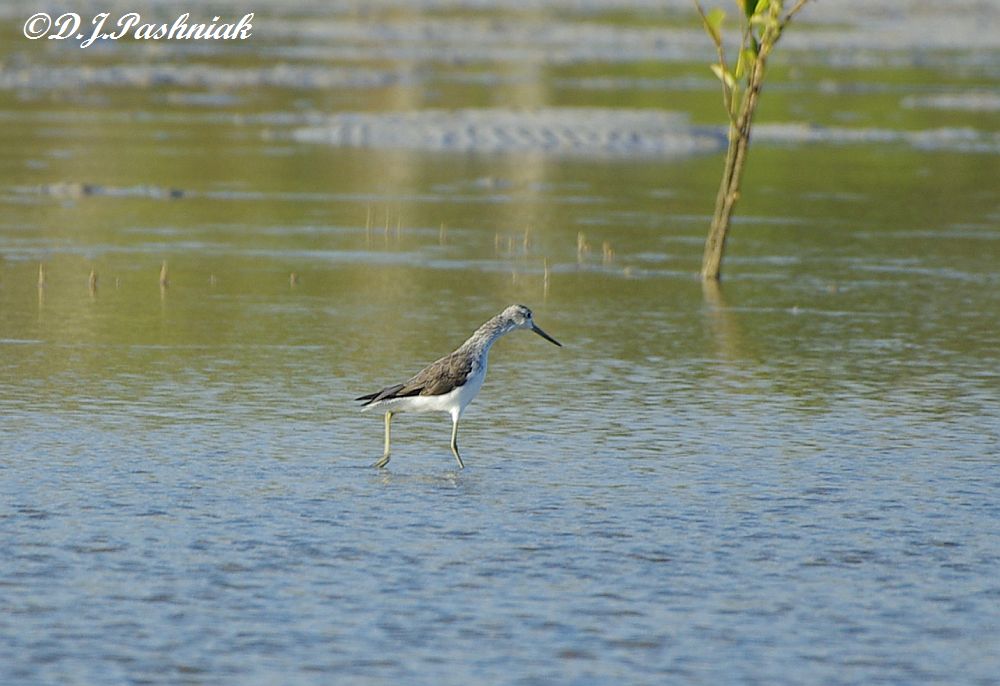
Further along the shoreline I could see a smaller bird busily dashing through the shallow water and then stopping to peck up whatever it had disturbed. I eventually got close enough to see that it was a Marsh Sandpiper.
This soldier crab ran away just ahead of me and then decided it would be safer to dig under the sand for a while.
The bush at the edge of the bay looked clear and crisp in the early morning light.
It was a great start to what promises to be another very hot day.

Sunday, December 4, 2011

Early Morning.

This post is for Bird Photography Weekly

It was a beautiful morning with a bank of clouds in the east which eventually covered the sun and muted all the colors.
The only bird I saw along the shoreline was an Eastern Curlew which was standing by itself out on a little rocky island. This is the only shorebird I know that doesn't seem to mind roosting by itself as long as it is not disturbed. If disturbed it then flies off and joins the rest of the Eastern Curlews and other shorebirds at the usual roost sites. This one disturbed before I got anywhere near and then flew off with its usual harsh squawk.

Wednesday, November 9, 2011

Synchronized Flying?

This post is for World Bird Wednesday.

These two were part of a large flock of Eastern Curlews that flew up from the other side of the roost and whirled overhead for a while before settling down again well away from my camera's reach.

Monday, September 19, 2011

Eastern Curlews

For more bird photos visit the Bird Photography Weekly.

I still hadn't seen any large flocks of Godwits by the end of last week but there were good numbers of some of the other migratory shorebirds. These Eastern Curlews were out on the end of the point at Inskip Point. I counted 70 birds.
When I first saw them they were resting and sleeping.
Is that a yawn or a squark?
Inskip Point is where vehicles get on the barges to go over to Fraser Island. As well it is a favorite place for fishermen to launch their boats. It was not long before the birds were disturbed and flew off. There had been people walking about on the sand island when I first arrived but as they had left by now the birds decided that was a better place to rest.

Friday, December 10, 2010

Eastern Curlews

The other day while I was photographing shorebirds a raptor frightened up a flock of Eastern Curlews (Numenius madagascariensis). They whirled overhead then settled down on the other side of the bay again. The Eastern Curlew is the largest shorebird to visit Australia in our summer - 60-65cms from beak to tail. It breeds as far north as Siberia and Mongolia. (Click photo to enlarge.)
For more photos of the sky visit Skywatch Friday.

Wednesday, January 13, 2010

Birds and Mangroves

I kayaked over to the Carlo Island roost site yesterday. I wanted to see if I could find a way through the mangroves to the other side of the Whimbrel roost and also to the north side of the bay where we went in a 4 wheel drive vehicle last month. No, I could not get to the other side of the Whimbrel roost but, Yes, I found a way to the north shoreline.
There are a number of different mangrove varieties in this area with quite different growth habits in different areas.
The mangroves where the Whimbrels roost are quite distinctive. They don't have rounded crowns as most mangroves do but almost look to be broken off at the same height - although there are some higher branches where Whimbrels roost and watch for any disturbances. There are thick stems/trunks visible so they are not just young trees. There is new healthy growth all through the area so they are not dead or dying trees. It is only in the roost area that the trees are like this. Surrounding areas have larger well-shaped trees as well as much smaller and younger trees. I would be interested in any opinions as to the reason - from those who have more knowledge about mangroves than I do.
When I kayaked through the mangroves to the north shoreline I found the Godwits and Eastern Curlew were roosting in the shallow water at the edge of the bay. I stayed well away so I didn't disturb the birds - the Godwits stayed where they were but some Eastern Curlew flew.
I saw a number of Orange Mangroves (Bruguiera gymnorhiza) with both flowers and fruit on them. The red colored flowers made a nice contrast with the dark green leaves.
Next to these Orange Mangroves were some with white flowers (not yet open) and much longer fruit - Red Mangroves (Rhizophora stylosa) I think - although I am still having trouble identifying some of the mangroves.
While paddling slowly and quietly through these mangroves I saw a Striated Heron. This one let me get quite close without showing any signs of being disturbed. It turned and looked me over and then went back to looking the other way.
The round trip was a bit over 6 kilometers and the hardest part is always getting the kayak back up on the car! This photo is looking from the Carlo boat launch back towards Tin Can Bay.

Friday, August 21, 2009

What a Beautiful Morning!

A morning like this one is worth celebrating for itself, - but the real cause for celebration is that I went out in my kayak for the first time in 5 months! I just hope there are lots more days like this from now on.
I went over to the shorebird roost on Crab Creek. This roost is in behind the mangroves that fringe the creek and has an interesting mix of sandbanks, mangroves and saltmarsh plants. Whichever way you look the light on the water is different.
There was no wind to start with but within a couple of hours it was up and blowing quite strongly. I need to develop some strength in my arms and shoulders again :-(
I counted 34 Eastern Curlews on the flats over there. During winter there are seldom more than half a dozen over there so I think that these are possibly some of the first migrants to return for the summer. There were two Pied Oystercatchers with them.
There were also a few Bar-tailed Godwits (in numbers usual for over winter) and a lone Common Greenshank that made itself visible when it started calling loudly and then moved. As usual there were numbers of little Red-capped Plover. These are very difficult to see as they are small enough to simply disappear amongst the saltmarsh plants if they stay still. Only when they move do you see how many are scattered across the flats.

Tuesday, February 24, 2009

Eastern Curlew


The Eastern Curlew (Numenius madagascariensis) is the largest of our migratory waders. It's easy to identify but not easy to get close to.
Since I bought a DSLR a few months ago I have really been enjoying the way I can now take photos of birds in flight. There is so much beautiful color and pattern to see on the spread wings.
For more bird photos visit the Bird Photography Weekly.

Sunday, October 19, 2008

Inskip Point

I had an interesting walk out at Inskip Point yesterday afternoon. The tide was higher than I had expected it to be so the only birds I saw were right up on the point where all the traffic goes. It always surprises me how many birds use the area despite the number of vehicles and people all around them.
The first waders I saw were Red-capped Plovers and Red-necked Stint busily hunting for food in an area of very soft sand. These are the Red-necked Stint.
There was one Eastern Curlew which definitely didn't want me to come any closer.
There was a juvenile Crested Tern that really didn't know what it should and should not be eating. This fish is poisonous and if it had managed to swallow it the result would be disastrous.
Then I spotted a single Whimbrel and tried to get closer to get a good photo but it was even more timid than the Eastern Curlew.
While I was slowly trying to get closer another bird flew in and landed close by. This was a juvenile Bar-tailed Godwit – the first I have seen this season. They leave the arctic some weeks after the adults have left. The plumage of the juveniles has quite a different pattern. They only keep this plumage for a few months after they reach here and then molt into the typical adult patterns. I will include a photo of an adult for comparison taken a few weeks ago.
The best sighting of the afternoon was when I was walking back to the car park along the bush track from the point. Unfortunately my attention was in the tree-tops where I could hear birds. I heard a rustle in the grass very close to my feet and was just in time to see Black-breasted Button-quail scurry into the longer grass. I was too slow getting the camera up to take any photos but it certainly made a nice end to the afternoon walk.